Segment Two · Science Proof Series
Our Solar System:
Too Precise to Be an Accident
If the universe's origin points to a Creator, what about our own cosmic neighborhood? The more we examine our solar system, the stranger and more improbable it appears, in ways that defy random formation.
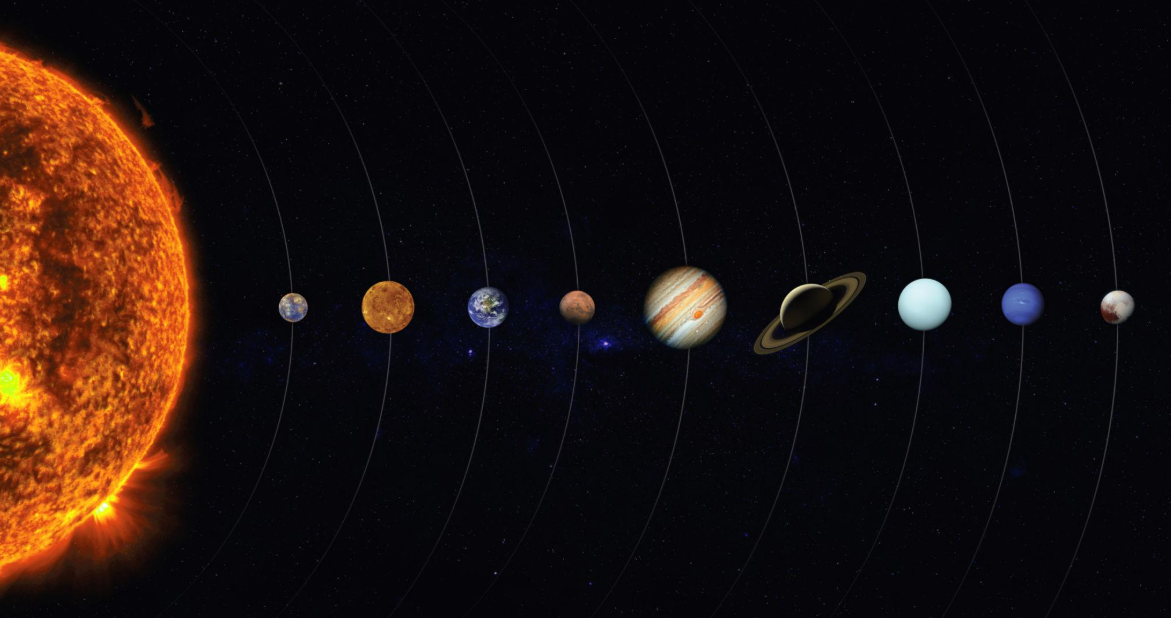
The Planets
Calibrated, Not Random
Of all the planets in our solar system, the numbers don't add up to chance. From axial tilts to orbital spacing, the precision is systematic.
★ Fact
The Earth-Mars Coincidence: Too Precise to Be Random
Despite forming under entirely different conditions at different distances from the Sun, Earth and Mars share two properties with uncanny precision: an axis tilt of approximately 23 to 25 degrees and a rotational day within 3% of each other (Earth at 24 hours, Mars at 24.6 hours).
These values are not cosmetically similar. They are functionally significant. Earth's 23.4° axial tilt is precisely what produces our seasons, moderates our climate, and makes large portions of the planet habitable. A tilt significantly higher or lower would produce temperature extremes incompatible with life.
That Mars mirrors this same value, independently, across 140 million miles of space, is not predicted by standard solar formation models and has no agreed-upon naturalistic explanation. Chance does not repeat itself this precisely. Two planets sharing the exact values most critical to sustaining life, one of which does sustain it, points not to coincidence but to calibration. And calibration requires a Calibrator.
"When I consider Your heavens, the work of Your fingers, the moon and the stars, which You have ordained. What is man that You are mindful of him?"Psalm 8:3-4
◉ Evidence
The Angular Momentum Anomaly
The Sun contains 99.86% of all solar system mass, yet holds only 1.9% of its angular momentum. The planets hold 98.1%. There is no plausible solar origin theory that explains this radical imbalance. Astronomers agree: from angular momentum calculations, the planets may have been brought here from elsewhere.
→ Implication
Saturn's Geometric Hexagon
At Saturn's north pole sits a massive, near-perfect six-sided hexagon spanning approximately 29,000 km, wide enough to fit nearly four Earths inside it. It has persisted for decades, possibly centuries. A universe that produces this kind of order at a planetary scale, unprompted and unexplained, is not behaving randomly. It is behaving by design.
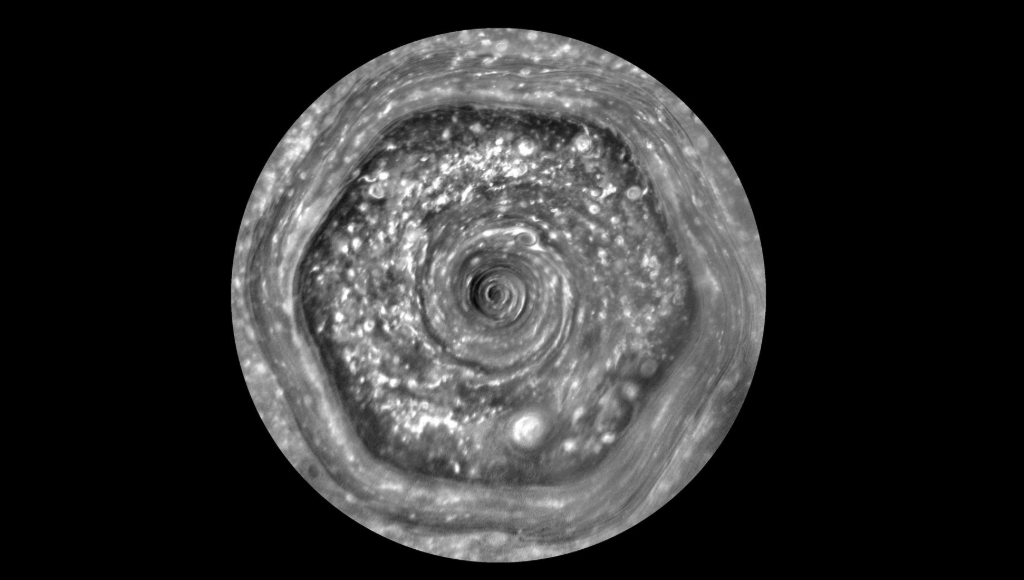
Saturn's polar hexagon: a near-perfect geometric structure spanning 29,000 km, persisting for decades. No purely natural mechanism fully explains its precision.
Ancient Record
Ancient Sumerian Planetary Knowledge
Thousands of years before modern telescopes, one civilization produced astronomical records of stunning accuracy. Nobody can explain how.
★ Fact
The VA 243 Cylinder Seal
The Sumerians produced astronomical records of stunning accuracy: precise planetary positions, lunar cycles, and celestial measurements that far exceeded anything their technology could have produced. The VA 243 cylinder seal, 4,500 years old and housed today in Berlin's Near Eastern Museum, depicts what many researchers identify as a heliocentric solar system, thousands of years before Copernicus was born.
No primitive culture maps the cosmos this accurately by accident. The gap between their tools and their knowledge demands an explanation. The most logical one is the oldest one: somebody told them.
"The heavens declare the glory of God; and the firmament shows His handiwork."Psalm 19:1
★ Fact
Heliocentric Knowledge Before Copernicus
Ancient Sumerian tablets showed the Sun at the center of a correctly-ordered planetary system, a fact not "re-discovered" by Western science until the 16th century AD.
◉ Evidence
Planetary Size & Orbital Distance
The VA 243 seal depicts planets at approximately correct relative sizes and orbital distances from the Sun, information not measurable with naked-eye astronomy alone.
→ Implication
The Gap Between Tools & Knowledge
Sumerian clay tablets, reed styluses, and naked-eye observation could not produce orbital mechanics data. The knowledge they recorded demands a source beyond their technology.
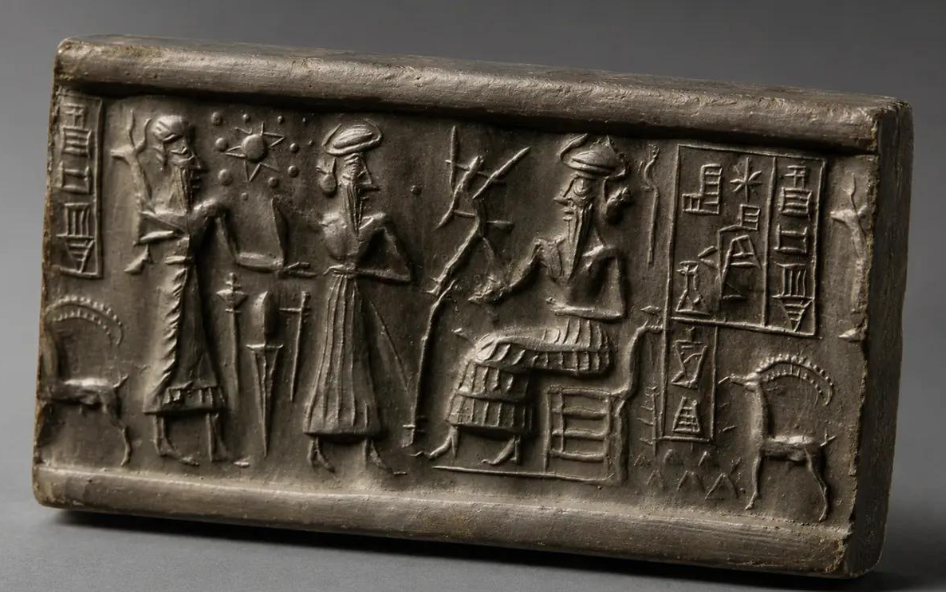
Sumerian Cylinder Seal VA/243: depicts the planets, their relative size, and orbital distance from the Sun. Enlarged and artistically rendered for detail.
The Big Question
What Are the Odds?
The chances of finding another planet with all of Earth's life-sustaining conditions arising by chance:
That's one followed by 139 zeros. Scientists haven't been able to calculate a number small enough. At some point, the "it happened by chance" answer stops being science and starts being faith of a very different kind.
"Let there be lights in the firmament of the heavens to divide the day from the night; and let them be for signs and seasons, and for days and years… God made two great lights: the greater light to rule the day, and the lesser light to rule the night. He made the stars also."
Genesis 1:14-16
★ Fact
Earth's Axial Tilt: 23.4°
This precise angle produces seasons, moderates global temperatures, and allows large portions of Earth to be temperate and habitable. Even a few degrees off would cause catastrophic climate extremes. It is not simply "good enough." It is calibrated.
★ Fact
Jupiter: Earth's Shield
Jupiter's immense gravity acts as a cosmic vacuum cleaner, capturing or deflecting asteroids and comets that would otherwise strike Earth far more frequently. Remove Jupiter and Earth's impact rate would increase by orders of magnitude, making complex life impossible.
★ Fact
The Moon's Perfect Size
Earth's Moon is precisely sized to stabilize our axial tilt over geological time. Without the Moon's gravitational anchor, Earth's axis would wobble chaotically between 0 and 85 degrees, turning the poles into tropics and the tropics into ice fields within millions of years.
◉ Evidence
The Goldilocks Zone
Earth orbits at precisely the distance from the Sun where liquid water is stable, known as the habitable zone. Move Earth 5% closer: runaway greenhouse effect. Move it 5% further: global freeze. The orbital radius is not approximate. It is exact.
Summary
What the Evidence Shows
- The Solar System was designed, not random. Every planet plays a role: Jupiter shields, the Moon stabilizes, Earth sits in the precise zone for life.
- The angular momentum anomaly cannot be explained by natural formation. The Sun has the mass but the planets have the spin. The physics don't add up without an external cause.
- Ancient civilizations recorded solar system knowledge beyond their means. The Sumerian VA 243 seal depicts a heliocentric solar system 4,000 years before it was "discovered."
- The odds against life emerging by chance are effectively zero. 1 in 10139 is not a small probability. It is a mathematical impossibility by any scientific standard.
- Scripture anticipated the science. "He stretches out the north over empty space; He hangs the earth on nothing." (Job 26:7, written millennia before orbital mechanics.)
🔬 A Note on Method
This isn't about proving religion
It's about following the evidence wherever it leads, the same principle that drives great science. The convergence of planetary physics, astronomical anomalies, ancient records, and scripture is either the most extraordinary coincidence in intellectual history, or it's telling us something.
You decide.
"He stretches out the north over empty space; He hangs the earth on nothing."Job 26:7
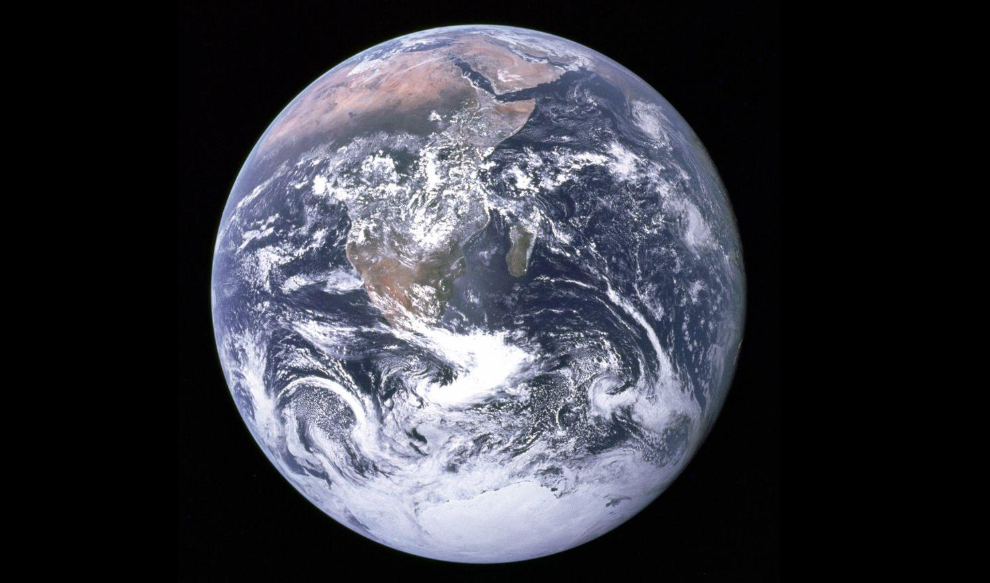
Earth: 93 million miles from the Sun. Move it 5% closer and you get Venus. Move it 5% further and you get Mars. The orbital radius is not approximate. It is exact.
Video Study Library
Watch the Evidence
These videos walk through the same evidence covered on this page, presented for group study, personal research, or sharing with someone who is searching for answers.
The Search Is Yours
The Evidence Is There.
These are not conclusions handed down from authority. They are observations from physics, astronomy, and ancient records that point in the same direction. Where they lead is up to you.
"You will seek Me and find Me when you search for Me with all your heart."
Jeremiah 29:13
Questions, doubts, counter-arguments: all welcome.
Drop them in the comments below. This page exists for exactly that conversation.
The Evidence Is Waiting
Explore the full Science Proof series, from the Big Bang to biology, and follow the facts wherever they lead.
View All ProofsSources & References
Based on research compiled in "It's a God Thing" and "In the Beginning" by Rob Lobefaro. Key scientific sources: NASA Cassini Mission (Saturn Hexagon, 2013) · Ward & Brownlee, Rare Earth (2000) · Laskar et al., Moon stabilization of Earth's obliquity (1993) · Zecharia Sitchin, The 12th Planet (VA 243 analysis) · Hebrews 1:10; Job 26:7; Psalm 19:1